During the Edo period Tochigi Town
prospered by shipping on the Uzuma River.
Tochigi Town, which had cultural exchanges
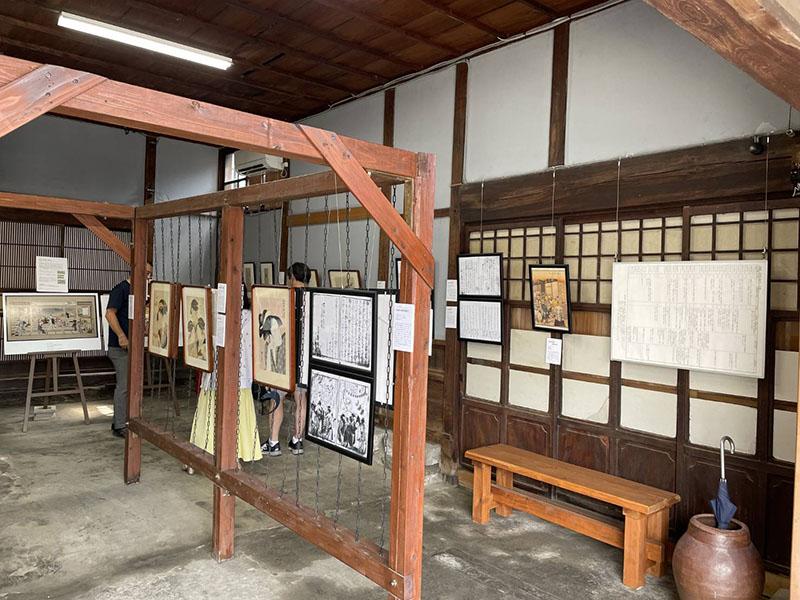
with Edo, also had connections with Kitagawa Utamaro We will introduce some of the works on display at the Tochigi Utamaro Community Center, which interprets the history and culture of Tochigi at that period.
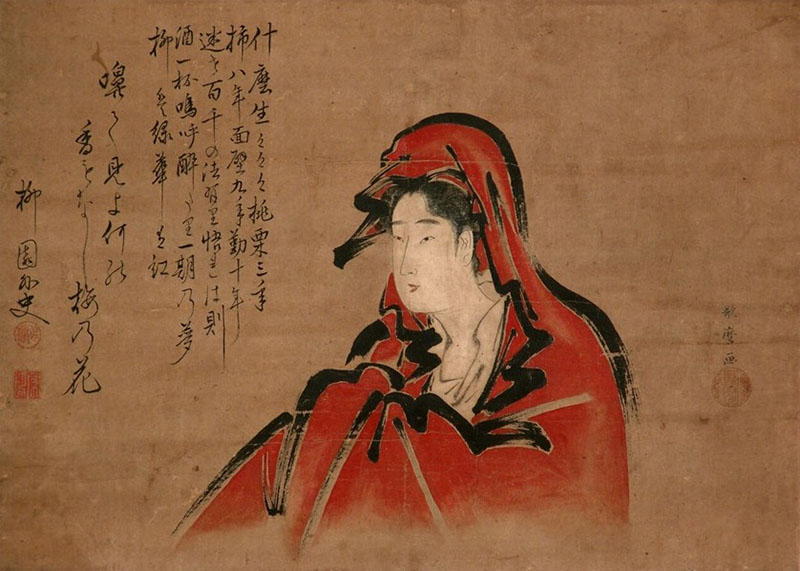
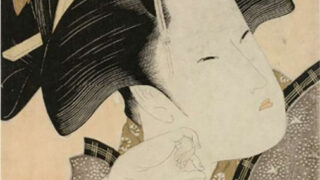
“Female Daruma Painting”around 1790-1793on a paper Chinese ink with coloringUtamaro paintTochigi City museum collection
Female Daruma painting is compared the
training of Daruma who had been meditating
in front of the wall for 9 years with the 10 years
of tough services of prostitutes.
Inside of the
box for the painting there are letters“Gorakudo
collection”.Gorakudo is Katayanagi Shunsuke
and from this we find it handed down in
Katayanagi family. Ryuen Gaishi added poem.
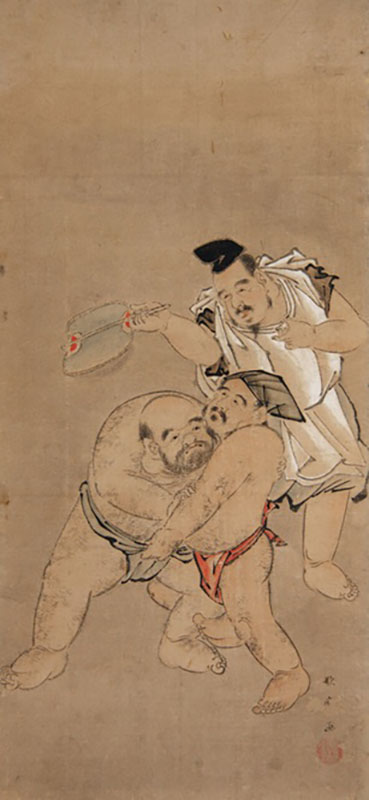
“Sumo Wrestling of 3 Gods of Luck”1791-1793 black and white brush painting on a paperwith light coloringthe collection of Tochigi City museum.
Daikoku(ritht, he god
of wealth) and Hotei
(left, the god of
happiness) are having
a sumo bout with
Ebisu(the god of business
and fishing) acting as a
referee. The scene of
Daikoku and Hotei sumo
with the referee of Ebisu
could be found in
Otogi Zoshi “Kakure Sato(hidden village) early
Edo era and “Umezu Choja Story”from
Muromachi era to early Edo era.
Utamaro drew other sumo pictures like this.
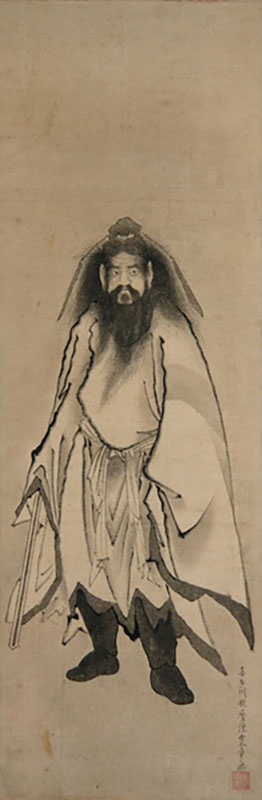
“Picture of Zhong Kui”around 1791-93 on a paper Chinese ink Kitagawa Utamaro former Toyoaki picture Tochigi City Museum collection
Zhong Kui is told to be
a god which appeared in
a dream of emperor Genso
of ancient China and cured
his illness with a little demon.
When he woke from the
dream, he ordered famous
painter GO Dougen to draw
the figure. This is said to be
the start of the Zong Kui’s picture. In Japan people
thought it work to avoid smallpox. In Boy’s Festival
it is frequently drawn on flags. On this picture
Zhong Kui is drawn lively and vivid around his hair
and beard.